If you're planning a trip to Cancun and have heard about swimming with whale sharks, you might feel a mix of excitement and hesitation. The word "shark" alone can trigger alarm bells, but here's the reassuring truth: whale sharks are nothing like the predatory sharks you've seen in movies. These magnificent creatures are gentle, slow-moving giants that feed exclusively on tiny plankton and fish eggs, making them completely harmless to humans.
Each summer, the waters off Cancun host the world's largest gathering of whale sharks, transforming the Caribbean coast into one of the planet's premier destinations for encountering these endangered giants. This guide covers everything you need to know: from understanding what whale sharks actually are, to tour logistics, best times to visit, and how your encounter can support conservation.
Is a Whale Shark a Whale or a Shark?
Despite the confusing name, whale sharks are definitively sharks: fish that breathe through gills and are cold-blooded. The "whale" designation comes from their enormous whale-like size as the largest fish species on Earth, and their filter-feeding behavior that resembles how baleen whales eat.
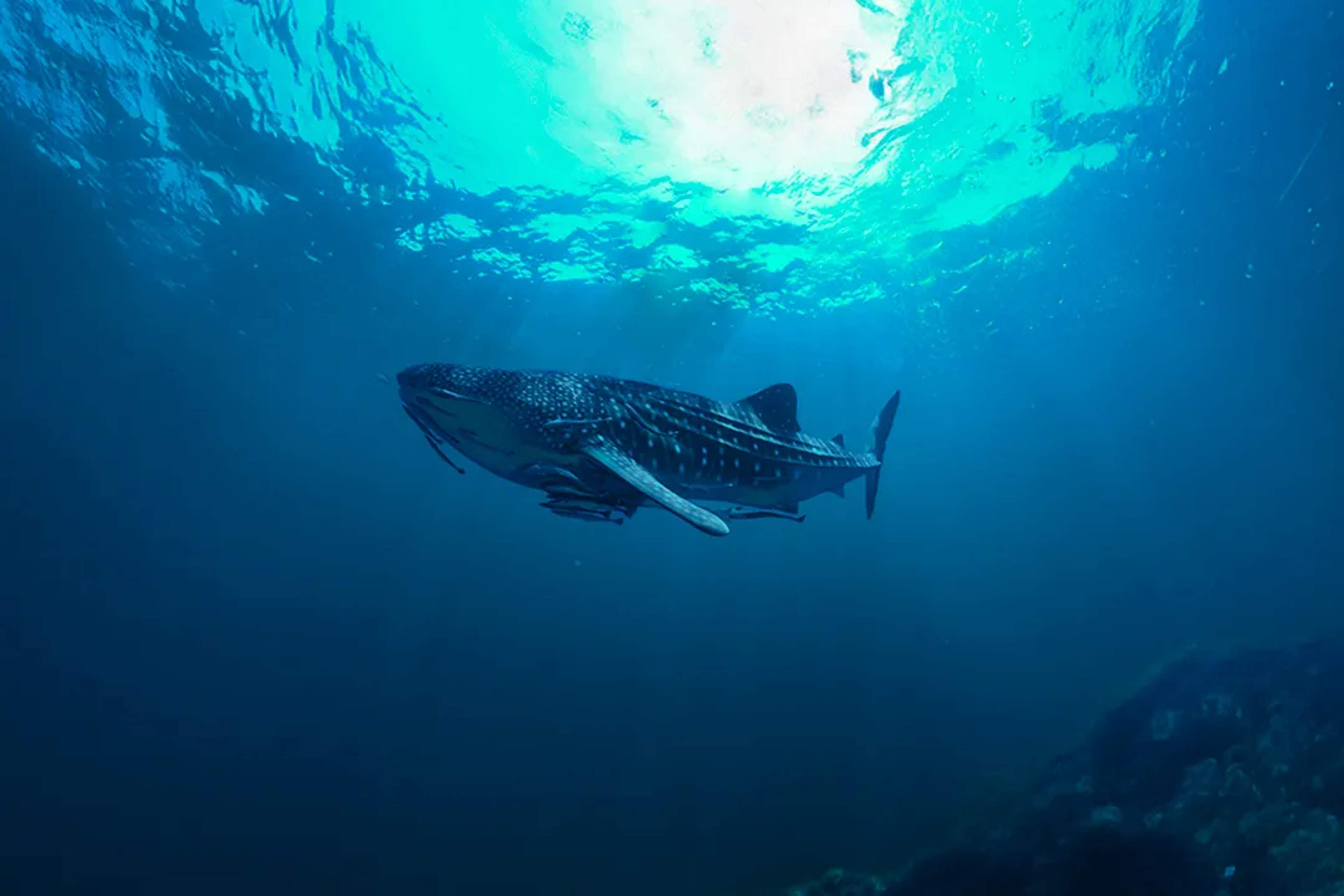
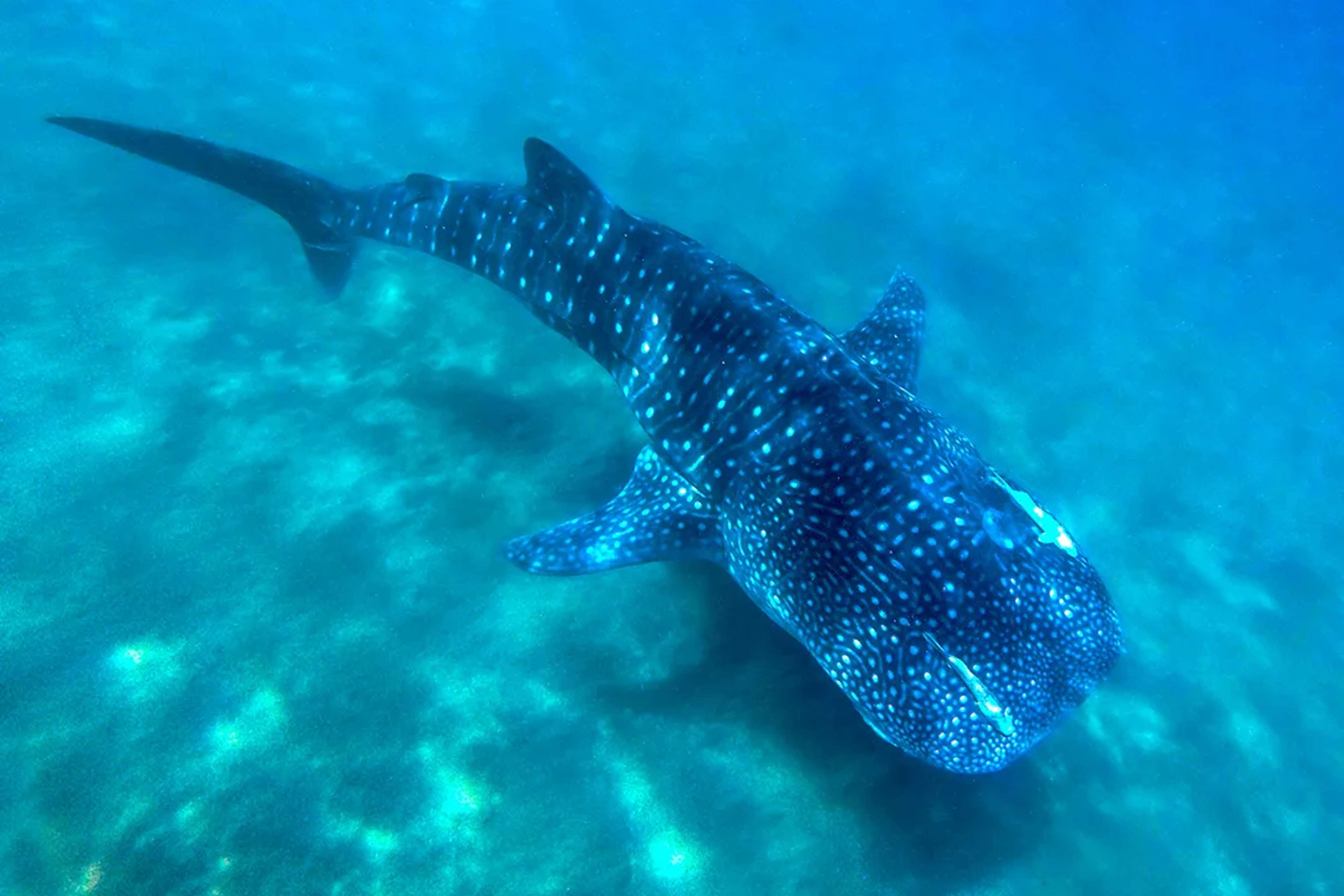
Like all sharks, they have cartilaginous skeletons rather than bones, multiple gill slits on each side of their head, and skin covered in tiny tooth-like scales called dermal denticles. Their filter-feeding biology makes them completely harmless to humans, setting them apart from their more aggressive shark relatives.
How Big Are Whale Sharks?
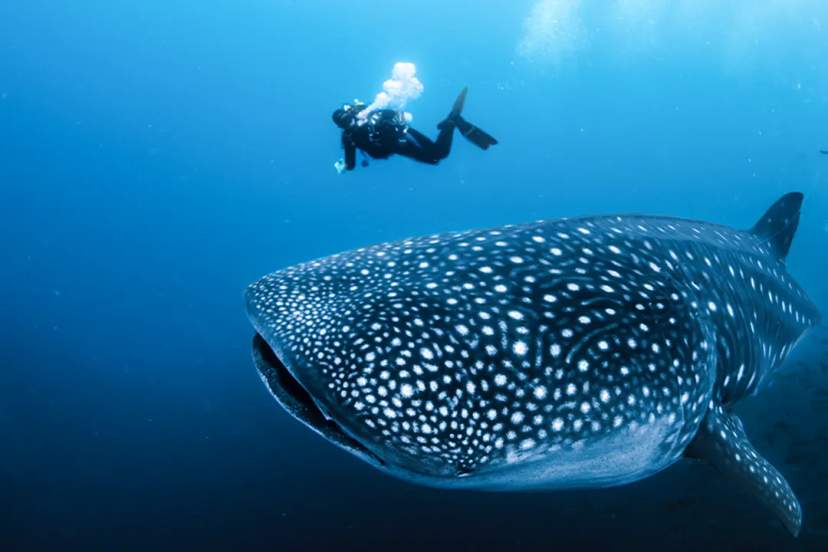
Whale sharks hold the title of the largest fish on the planet, dwarfing every other fish species in both length and weight. To put their size in perspective, a single whale shark can be longer than a school bus and heavier than several elephants combined.
How Long Is a Whale Shark?
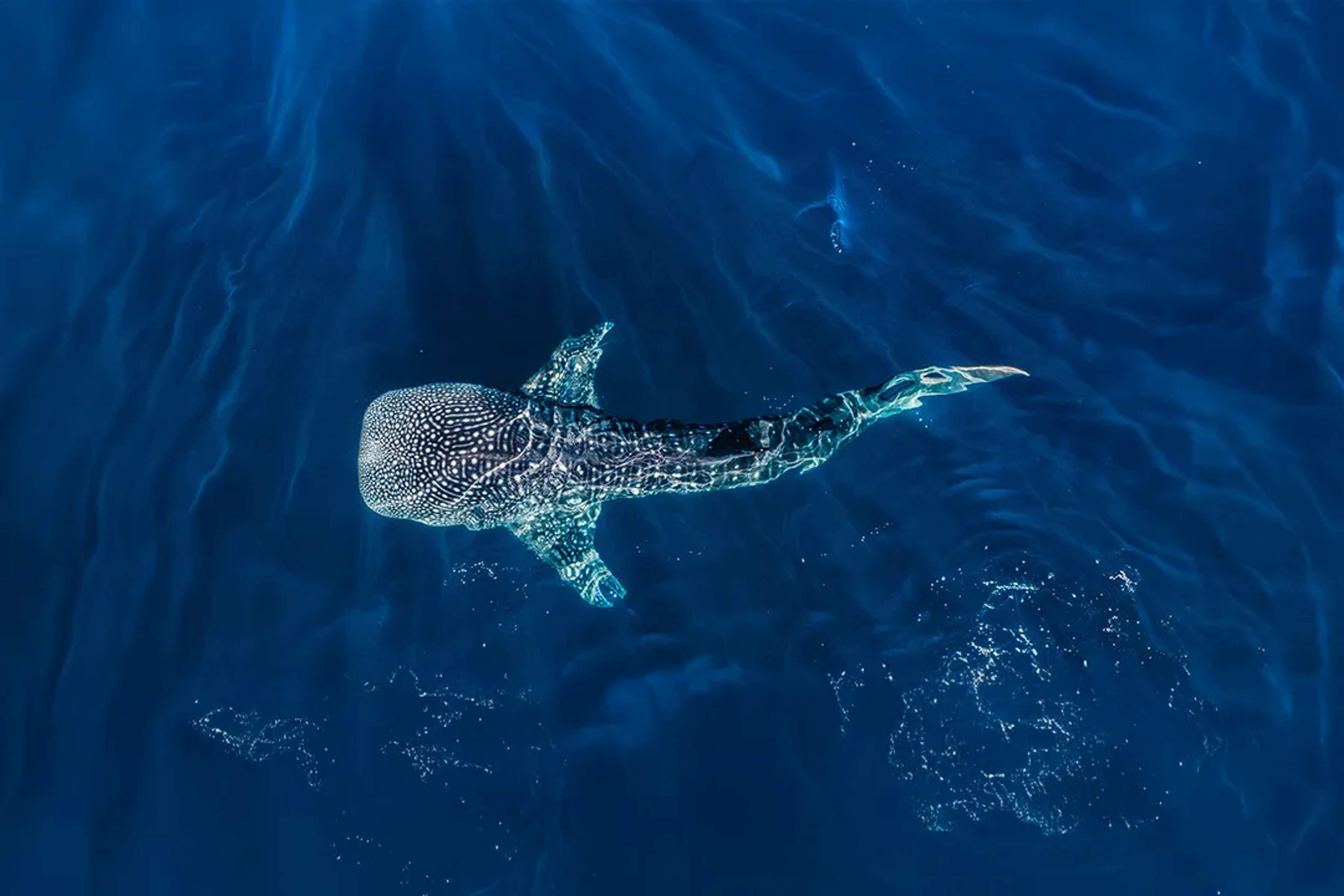
Adult whale sharks average 32 feet in length, though the largest scientifically verified specimen measured an astounding 61.7 feet, nearly double the typical size. Most whale sharks in Cancun range between 20 and 40 feet, with females generally growing larger than males.
Newborn whale sharks, called pups, measure around 2 feet at birth and grow slowly over decades to reach their impressive adult dimensions.
How Heavy Are Whale Sharks?
A typical adult weighs around 20,000 pounds, roughly equivalent to 4-5 automobiles. The largest individuals can tip the scales at over 40,000 pounds, making them heavier than many whale species despite being fish.
This massive body weight is supported by water, allowing them to move with surprising grace despite their enormous bulk. These measurements confirm whale sharks as the largest fish species on Earth, a title they've held throughout recorded scientific history.
Whale Shark Facts
Gentle Giants with Thousands of Tiny Teeth
Whale sharks possess thousands of tiny teeth that play no role in feeding; they rely entirely on filter-feeding. Their mouths stretch up to four feet wide, but narrow throats mean they can only consume microscopic plankton, fish eggs, and larvae. They filter more than 1,500 gallons of water per hour during approximately 7.5 hours of daily feeding.
The Cancun aggregation draws them for spawning little tunny, creating dense fish egg patches researchers describe as "caviar soup," an irresistible buffet for whale sharks across the region.
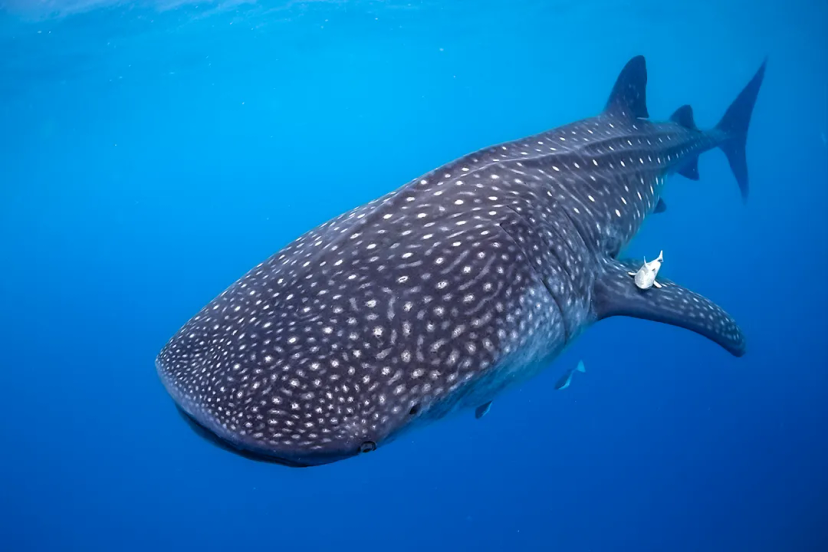
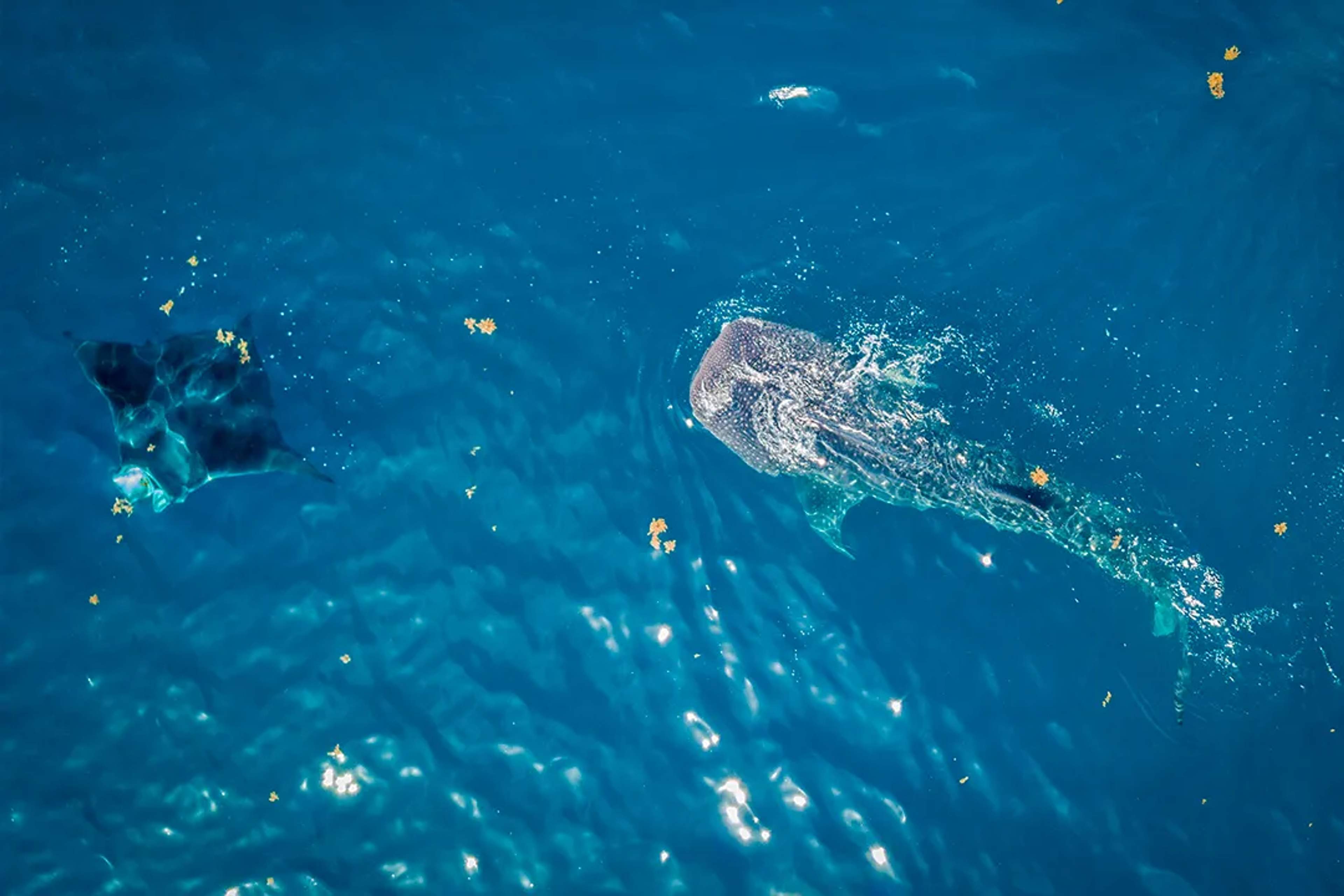
Each whale shark displays bright white spots and stripes against their dark gray backs in patterns as unique as human fingerprints. These distinctive markings remain consistent throughout their lifetime, and photographs of these patterns help scientists track individual whale sharks across years and ocean basins, contributing valuable data about their movements and behavior.
Slow Swimmers, Long Travelers
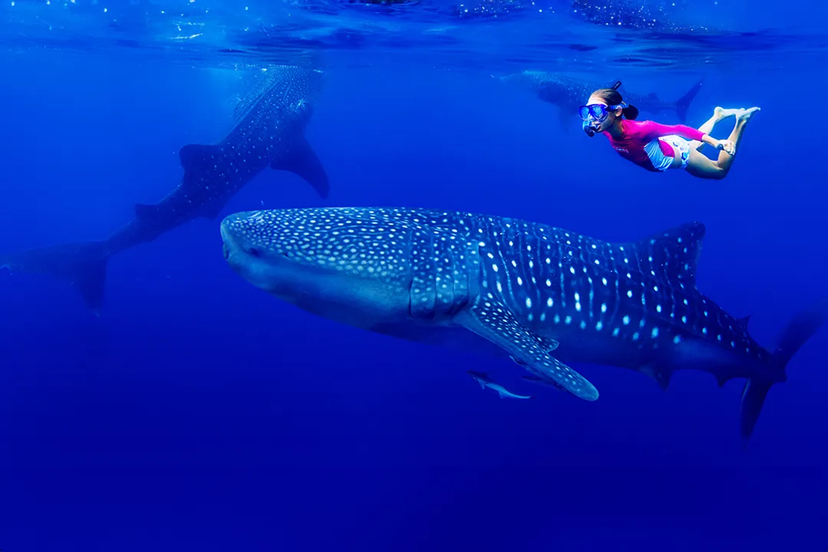
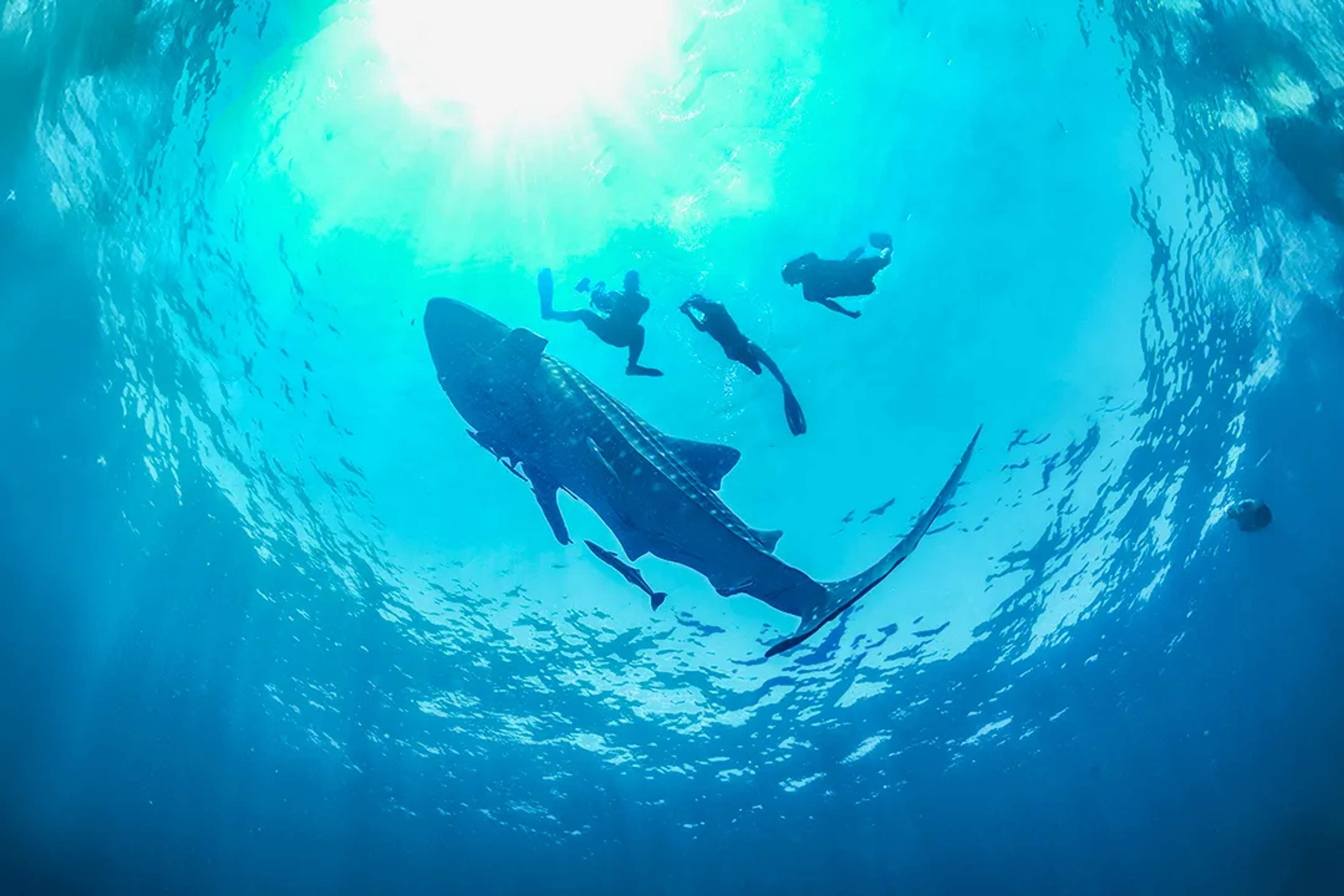
Their leisurely swimming speed of 4 mph (4-5 km/h) makes them remarkably easy to swim alongside, perfect for snorkelers of all skill levels. Despite this relaxed pace, they're accomplished long-distance travelers capable of journeying thousands of kilometers during migration.
They spend over 90% of their time in shallow waters under 200 meters where plankton concentrations peak, though they can dive to depths exceeding 1,900 meters when needed, descending into the deep ocean for reasons scientists are still working to understand.
How Long Do Whale Sharks Live?
Whale sharks can live 50 to 130 years, placing them among the longest-lived fish species. Sexual maturity arrives around 25 to 30 years of age, meaning these animals don't begin reproducing until their mid-to-late twenties. This exceptionally slow reproductive timeline makes population recovery difficult once numbers decline.
Whale Shark Season in Cancun
When is the Whale Shark Season?
Whale shark season runs from mid-May through mid-September, with peak concentrations occurring in July and August. This timing is predictable and reliable, driven by natural ocean cycles. The spawning of little tunny, a small tuna species, creates the dense fish egg concentrations that attract hundreds of whale sharks to these specific waters.
Why Cancun Has the World's Largest Whale Shark Gathering
The northeastern Yucatan Peninsula hosts documented aggregations of up to 420 whale sharks: the largest assembly recorded anywhere on Earth. Three unique factors converge to create this phenomenon: massive little tunny spawning events confirmed as the primary food source, concurrent zooplankton blooms that provide additional food sources, and unique oceanographic conditions.
Best Time to See Whale Sharks in Cancun
July and August offer peak experience probabilities when aggregation numbers reach their highest, with the season running from mid-May through mid-September providing reliable opportunities during this window.
Book in advance for July and August departures, as tours fill quickly during peak months.
Where to See Whale Sharks Near Cancun
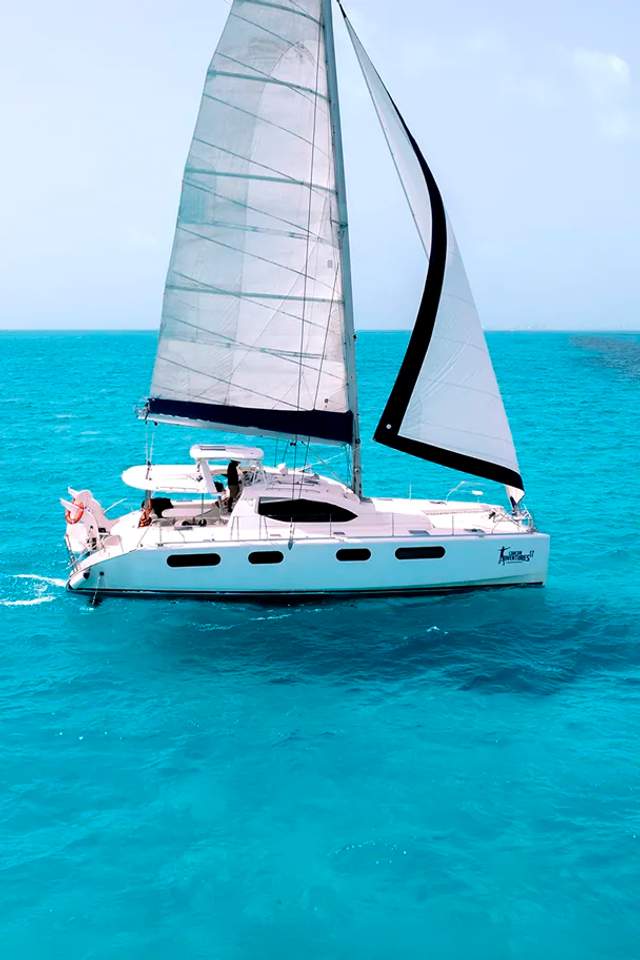
Whale sharks gather in open ocean waters north and northeast of Isla Mujeres, near Isla Contoy National Park, 50 kilometers from the Cancun coastline. Getting there requires roughly 90 minutes by boat from mainland departure points. You won't experience whale sharks in the Cancun hotel zone or anywhere near Cozumel; those hoping to swim with them must commit to a full-day open ocean adventure.
Swimming with Whale Sharks: What to Expect
Is It Safe?
Absolutely. Whale sharks are gentle filter-feeders whose biology makes them completely harmless to humans. The term "shark burn" describes damage humans cause to whale sharks through physical contact; touching removes their protective mucus layer, which is why it's strictly prohibited.
The safety precautions that exist are designed primarily to protect the animals from harm, rather than to protect swimmers from the whale sharks themselves.
What does a Whale Shark Tour Include?
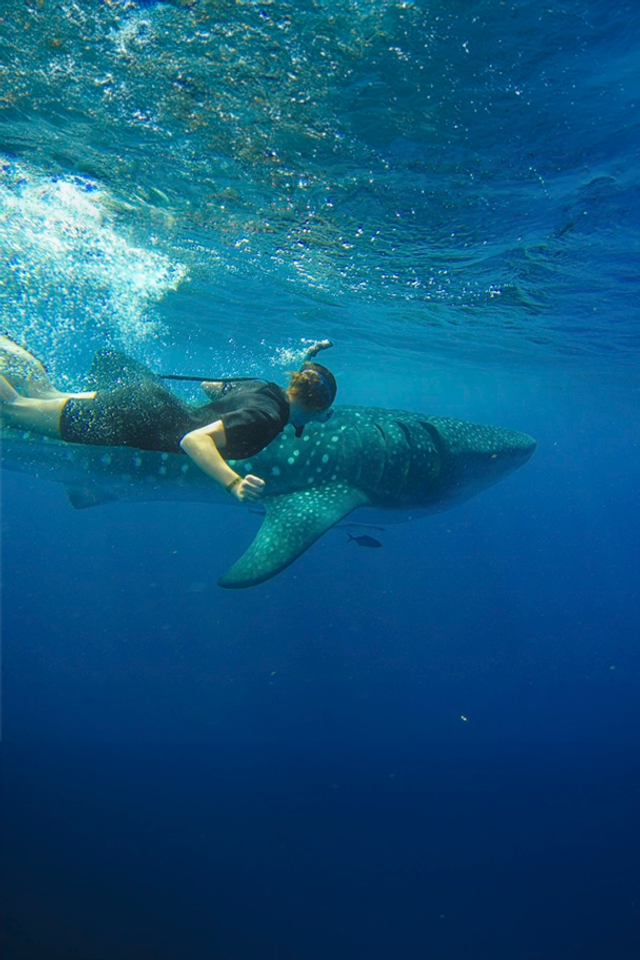
Our Swimming with Whale Sharks tour provides everything you need for an unforgettable encounter with these gentle giants. The experience begins in cool morning hours when whale sharks feed most actively near the surface, making them easier to spot and approach. Once whale sharks are located, small groups take turns descending in pairs with your guide, rotating through multiple in-water sessions so each swimmer gets opportunities to swim alongside these magnificent creatures.
The tour includes round-trip transportation, lunch, and all necessary equipment. Your guide maintains conservation protocols throughout the experience, ensuring these endangered animals are protected while you enjoy multiple close encounters with the world's largest fish.
Requirements and Restrictions
Participants should be at least 8 years old to safely enjoy the open ocean experience. You must be comfortable in open ocean conditions and capable of using snorkeling equipment effectively. Wetsuits and life jackets provide sun protection and flotation; no chemical sunscreens are permitted to protect marine ecosystems.
Bring sun-protective clothing like long-sleeve rash guards and wide-brimmed hats for additional protection during the hours on the boat.
How to Swim Responsibly with Whale Sharks
Mexican regulations protect these gentle giants while ensuring you have an amazing experience. Here's what to keep in mind:
- Keep your distance – Stay at least five meters (about 16 feet) away from the whale shark
- Enter calmly – Slip into the water quietly in two-person groups to avoid startling them
- Approach from the side – Never swim directly toward their head or block their path
- Look, don't touch – Touching removes their protective mucus layer and can harm them
- Skip the flash – Flash photography stresses the animals, so keep it natural light only
- Let them lead – If a whale shark changes direction, give them space to move freely
Your guide enforces these protocols not to limit your experience, but to protect an endangered species while still giving you the incredible encounter you came for.
Whale Shark Conservation
Whale sharks are classified as Endangered by the IUCN Red List, with populations declining more than 50 percent over the last 75 years. The primary threats include targeted fishing in some regions, bycatch in nets designed for other species, and vessel strikes in high-traffic waters.
Well-regulated tourism supports conservation by creating economic value for living whale sharks. When communities and governments earn more from protecting than harvesting them, financial incentives drive conservation. This model only works when tour providers comply with federal regulations and tourists choose responsible practices.
Plan Your Time Swimming With Whale Sharks
Floating beside a whale shark creates wonder unlike anything else; the sheer scale and gentle grace of sharing space with an endangered giant transforms how you understand the ocean. It's the kind of experience that stays with you long after you've dried off and returned to shore—a story you'll tell for years.
If you're visiting Cancun during the summer months, this is your chance to witness one of nature's most spectacular gatherings. Few places on Earth offer such reliable access to these magnificent creatures in their natural habitat. Ready to make it happen? Explore our Swimming with Whale Sharks tour and secure your spot before the season fills up.